
Rockland County Criminal History Checks
Begin with the narrowest reliable fact: the arresting agency, event place, court, docket number, or booking date. Rockland County criminal history is not stored in one public county database. A recent or pending case may appear in New York WebCrims, while filed Supreme and County Court papers come from the County Clerk. A village misdemeanor can remain with its own Justice Court. Records created by the Sheriff, Corrections, or a local police department must be requested from that specific holder.
Use a full legal name and exact spelling. Date of birth, docket number, incident number, and the town or village can separate people with similar names. A search result is an index or lead, not proof that every public paper is online.
- Identify whether the target is a police report, booking file, court case, state rap sheet, warrant, or supervision record.
- Search WebCrims for a known criminal case and narrow the county or court when the form permits.
- Ask the County Clerk or the correct town or village clerk for the filed case record.
- Request incident or custody papers from the agency that created them, using FOIL when needed.
- For your own fingerprint-confirmed New York history, use DCJS Personal Record Review and compare each cycle with certified dispositions.
Four Rockland County Criminal Record Systems
One event can produce four distinct Rockland County records. The police agency writes an incident or arrest report. Sheriff-Corrections creates a booking and custody entry when a person reaches the county jail. A Justice Court or County Court opens the prosecution file. The New York State Division of Criminal Justice Services, or DCJS, links fingerprint-supported arrest and disposition reports in the state repository.
Those files serve different purposes. The report describes the investigation and initial alleged conduct. The booking file proves a custody event. The court docket tracks filed charges and outcomes. A DCJS rap sheet joins state-reported cycles by fingerprint. Timing and sealing can cause one source to differ from another.
| Rockland channel | Best evidence | Main access route |
|---|---|---|
| Police or Sheriff | Incident and arrest report | Agency records request or FOIL |
| Sheriff-Corrections | Booking, custody, holds, and release | Corrections contact or Sheriff FOIL |
| Court clerk | Charges, docket, disposition, sentence | WebCrims plus the possessing clerk |
| DCJS | Fingerprint-linked New York record | Personal Record Review for the subject |
Official Background Checks in New York
New York does not offer the public a name search of the DCJS repository. A person, or that person's attorney, can request the person's own record through DCJS Personal Record Review. The process uses IdentoGO fingerprints, which reduces same-name error. A suppressed response omits sealed or suppressed material. An unsuppressed response shows the categories DCJS may lawfully give to the subject, including some sealed matters useful for self-review.
The Office of Court Administration Criminal History Record Search, or CHRS, is different. It is a paid exact-name and date-of-birth search of public New York court records, not a fingerprint rap sheet. Local clerk files, WebCrims, and CHRS may all miss sealed records. Their results should not be treated as identity proof.
| Official product | Identity basis | Coverage | Fee |
|---|---|---|---|
| DCJS Personal Record Review | Fingerprints | Your New York repository record | $13.50; hardship waiver possible |
| OCA CHRS | Name and date of birth | Public statewide court records | $95 per search |
| FBI Identity History Summary | Fingerprints | Your FBI-maintained submissions | $18 direct FBI fee |
| Rockland court inspection | Name or case number | That court's file | Inspection may be free; copy fees vary |
IdentoGO Rockland County Record Review
The DCJS Personal Record Review instructions explain both response types and the correction process. That official source also shows why the fingerprint route is the sound choice for checking your own Rockland County criminal record.
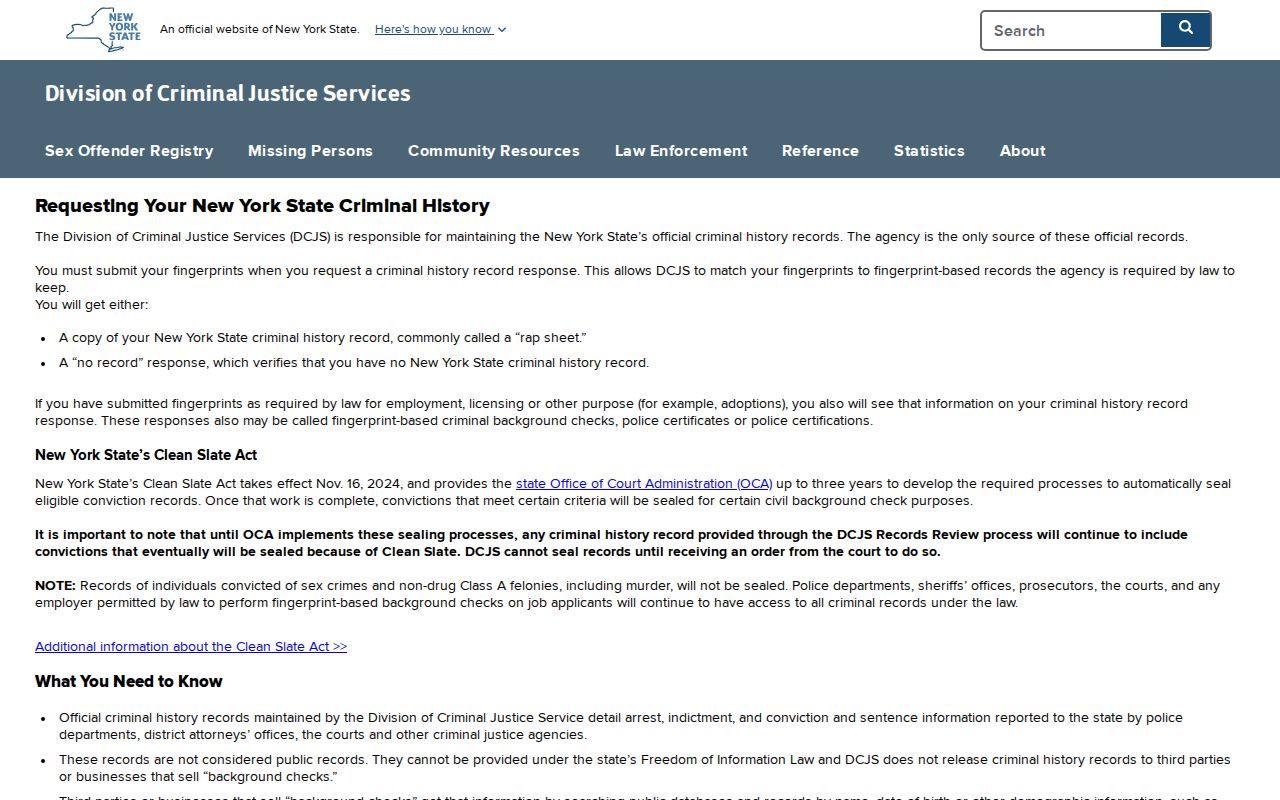
The page distinguishes a state repository record from a public court-name search and directs the subject toward certified court papers when an entry is wrong or incomplete.
Choose service code 15464Z for a suppressed response or 15465F for an unsuppressed response. Then use the IdentoGO enrollment portal to schedule fingerprint capture. The scheduler supplies current Rockland-area sites after a ZIP code is entered, so a static site address should not be assumed.
IdentoGO is the capture channel, while DCJS is the record custodian. Keep the receipt and review the response arrest cycle by arrest cycle. If a court outcome is absent, obtain a certified disposition from the court that decided the case before beginning the DCJS challenge.
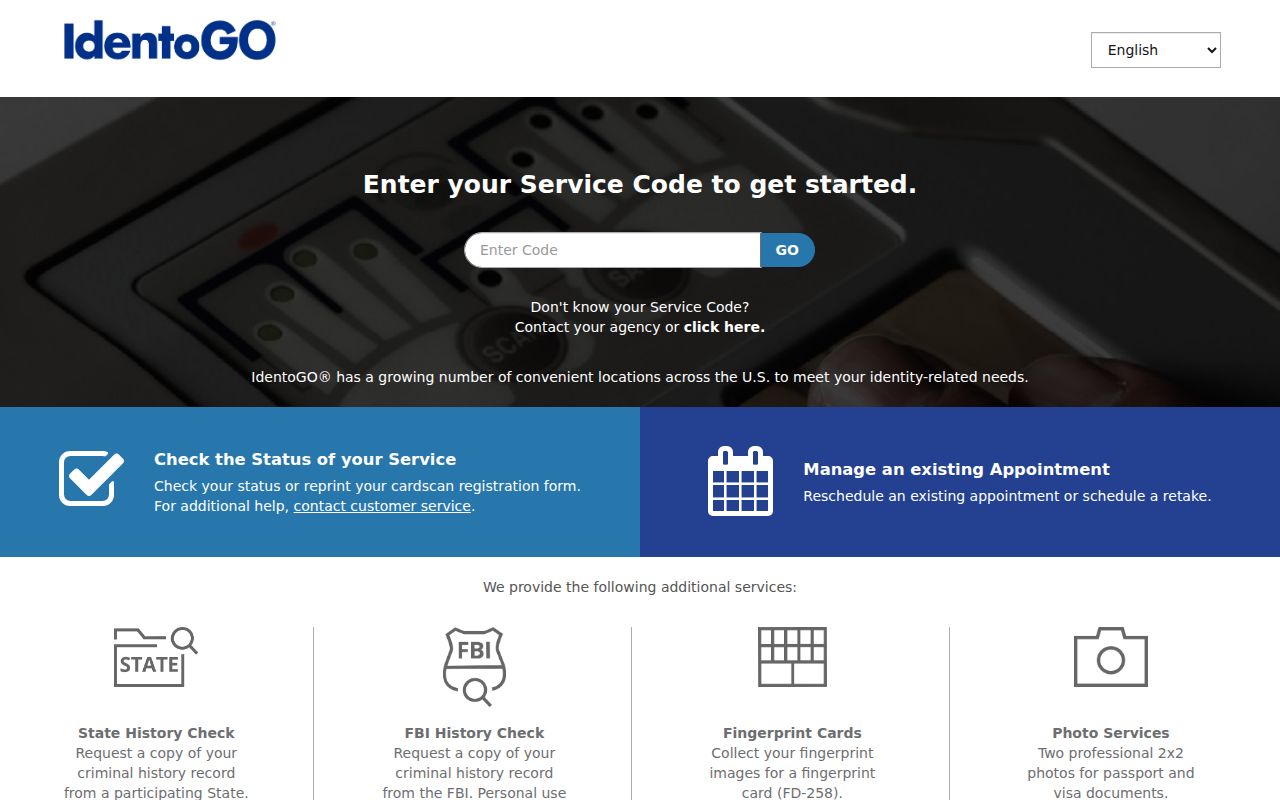
The enrollment screen is the current route to an appointment, but it is not a public search for another person's Rockland County history.
Kinds of Criminal Records
Rockland County criminal records take their meaning from the office and stage that created them. Initial allegations can change after a prosecutor reviews the case. Booking data can show release while a court case remains pending. A supervision record may begin only after sentence. Read each source in that setting.
- Incident and arrest reports contain the agency narrative, alleged offense, event details, and releasable attachments.
- Booking and custody records contain intake identifiers, listed charges, holds, bail or remand, and release data.
- Court case files contain accusatory papers, docket events, motions, pleas, dispositions, and sentences.
- Warrant records identify the issuing court and status when those facts are public.
- Probation, parole, and registry records document distinct forms of supervision or a legal registration duty.
Juvenile, youthful-offender, sealed, victim, medical, and active-investigation details are not ordinary public material. A gap in a public search can reflect those rules rather than prove that no event exists.
Rockland County FOIL Record Routing
The key Rockland rule is easy to miss: there is no countywide Records Access Officer. The county FOIL page requires the requester to select the department that keeps the record. The Sheriff cannot supply a Spring Valley Police report, and the County Clerk cannot substitute for a Corrections booking file.
Describe an existing document instead of asking the agency to explain an event. Include the record type, creating agency, date range, location, and an incident, docket, or booking number if known. Submission is free. Paper copies up to the statutory size may cost $0.25 per page, while other formats can carry actual reproduction cost. New York agencies generally must grant, deny, or acknowledge a request within five business days.
Rockland County Sheriff
55 New Hempstead Road
New City, NY 10956
845-638-5400
Rockland County Courthouse
1 South Main Street
New City, NY 10956
845-483-8310
Rockland County Criminal Records: What They Contain
A Rockland County criminal record should be read at the charge level. One count can end in conviction while another is dismissed. Names, aliases, dates, agencies, and identifiers help link the entries, but a name alone does not confirm identity. The source file also determines which fields are present.
| Name & Identifiers | Legal name, aliases, date of birth, descriptors, NYSID, docket, incident, or booking number as law permits. |
|---|---|
| Arrest / Booking Data | Arresting agency, date, place, intake time, listed charges, custody, holds, and release. |
| Charges & Statutes | Count sequence, offense text, statute citation, and felony, misdemeanor, or violation class. |
| Disposition | Plea, verdict, dismissal, acquittal, or other charge-level outcome and date. |
| Sentence | Jail or prison term, probation, conditional discharge, fine, restitution, and related orders when public. |
| Custody / Supervision | County custody, DOCCS placement, probation, parole, and known release dates in the proper system. |
Protected identifiers, victim data, sealed cases, and confidential supervision notes are withheld. WebCrims can display a case summary without giving the filed PDF. The Rockland County Clerk court-records channel remains the source for filed Supreme and County Court documents.
Rockland County Custody Record Paths
The Rockland County Correctional Center is a 258-bed facility with medical and mental-health units, but it is not a full criminal-history database. It holds county intake and custody records. No stable official public Rockland inmate-name roster was verified, so recent custody questions begin with Sheriff-Corrections at the main Sheriff number.
State and federal custody use other systems. The DOCCS Incarcerated Lookup covers New York state custody and accepts a DIN, NYSID, or name and birth year. The source page shows how a Rockland County case can later be indexed by state custody identifiers.
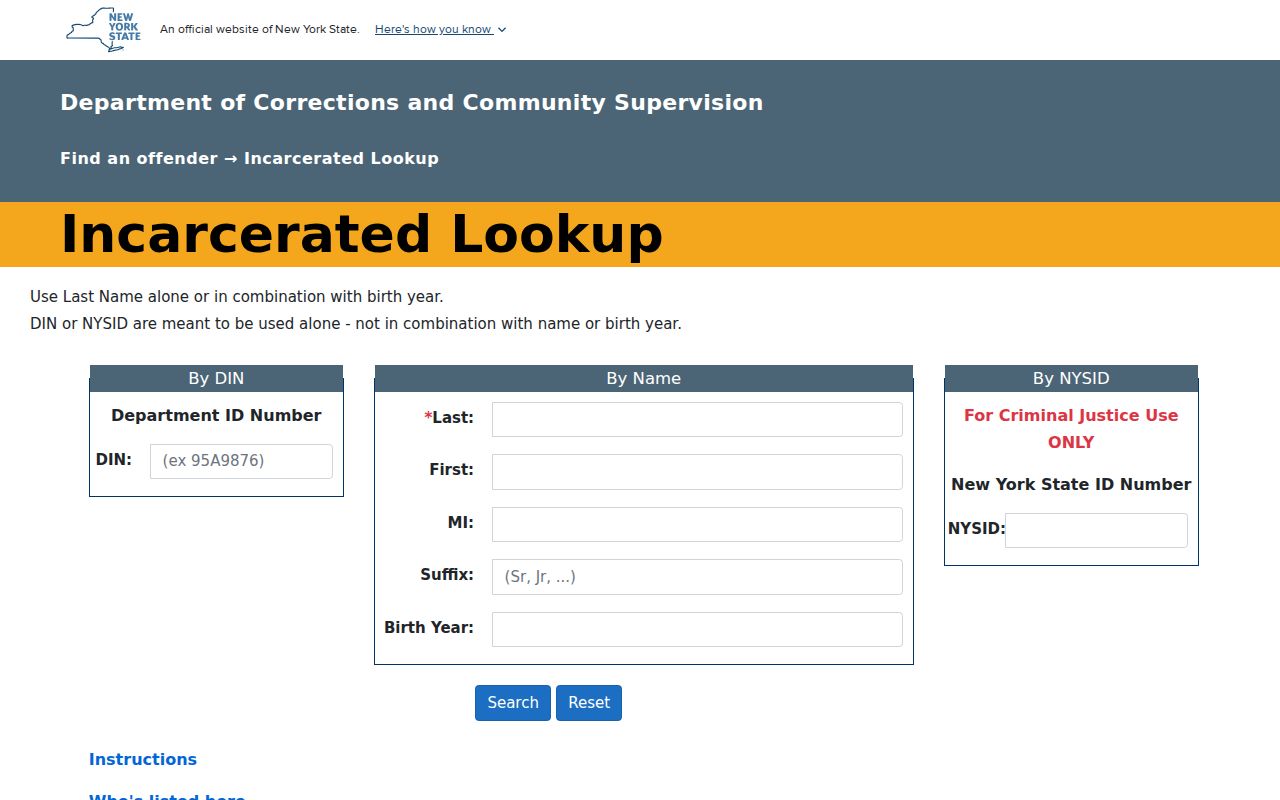
The state profile can include facility, sentence, county of commitment, and release-related dates, which are not the same fields as a Rockland jail booking.
After release to state community supervision, use the DOCCS Parolee Lookup. It covers parole status rather than county probation, which is administered by Rockland County Probation and is best confirmed through the sentencing court.
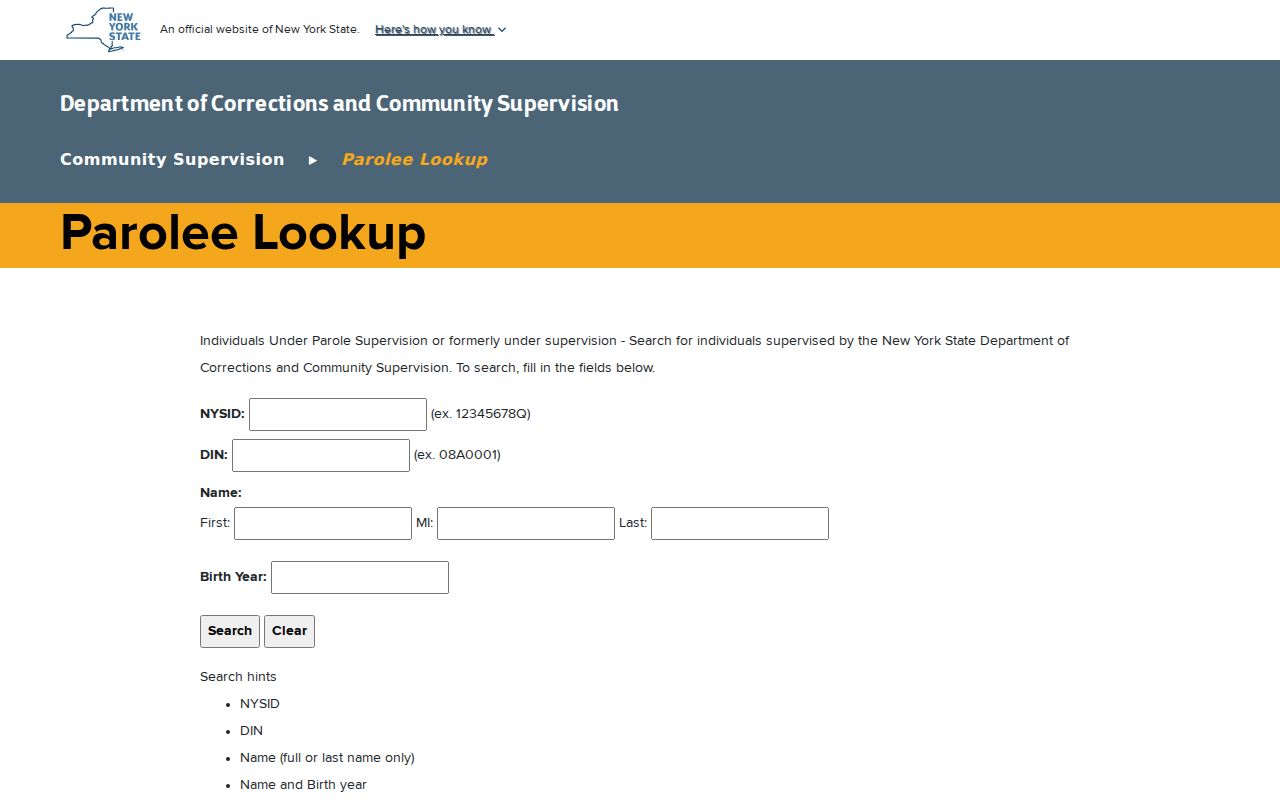
The separate lookup reflects a change in custody stage, not a second court case or a new conviction.
New York Public Access Laws
Public access in Rockland County depends on both the record and its custodian. FOIL governs executive-agency records, subject to privacy, safety, active-investigation, juvenile, and other exemptions. Court clerks supply court papers under Judiciary Law rules. DCJS repository records have controlled disclosure and cannot be obtained through a public FOIL request.
Key statutes:
Public Officers Law Article 6 presumes access to agency records while preserving listed exemptions.
Judiciary Law §255 directs court clerks to search files and provide authorized copies or certifications.
Executive Law §837 establishes DCJS criminal-history functions and controlled dissemination.
CPL 160.50 seals qualifying cases that end in the accused person's favor.
CPL 160.59 permits court applications to seal certain eligible convictions.
Ask for records that already exist. FOIL does not require an agency to answer a question, conduct research, or make a new list. A written denial should state the basis and appeal route.
Rockland County Criminal Court Terms
Rockland County criminal case entries use New York terms that can change the meaning of a search result. The charge status and outcome matter more than the mere presence of a name. A felony complaint can begin in a village or town court, then move to County Court only after an indictment or superior-court information.
- Accusatory instrument
- The filed paper that begins or supports the criminal action.
- Arraignment
- The appearance when charges are stated and plea or release issues may be addressed.
- Disposition
- The outcome of a charge or case, such as conviction, dismissal, or acquittal.
- ACD
- An adjournment in contemplation of dismissal, which can mature into dismissal if its terms are met.
- Bench warrant
- A warrant often issued after failure to appear or violation of a court direction.
- Sealing
- A legal restriction that removes a record from ordinary public disclosure without necessarily destroying it.
When a docket has several counts, read each one. The arrest charge, filed charge, and final conviction can be three different entries.
Restricted, Sealed & Expunged Records
New York generally uses record sealing rather than erasing all traces of a case. CPL 160.50 covers favorable terminations. CPL 160.55 applies to certain noncriminal convictions, while CPL 160.58 concerns eligible drug-treatment matters. Youthful-offender adjudications and juvenile records are confidential under separate rules.
Application-based sealing under CPL 160.59 may cover up to two eligible convictions, with no more than one felony, after the statutory waiting period. Listed sex offenses, Class A felonies, violent felonies, homicide offenses, and other excluded convictions do not qualify. A Rockland County Court conviction is handled at the New City courthouse. A town or village conviction stays with that local court.
Some criminal-justice agencies retain legal access after sealing. An unsuppressed personal DCJS response can therefore contain material that a public WebCrims or CHRS search does not show.
Rockland County Clean Slate Timing
New York's Clean Slate law, CPL 160.57, took effect on November 16, 2024. Eligible misdemeanors generally seal after three years and eligible felonies after eight years, subject to the statute's release, new-case, and exclusion rules. Sex offenses and non-drug Class A felonies are excluded. The process is automatic, but implementation is not instant.
OCA has up to three years to build the statewide process. DCJS cannot seal an eligible entry until it receives the court or OCA action. If a Rockland County conviction remains visible during that work, compare the public result with your own DCJS review and the certified court disposition. Keep any sealing order and verify that the clerk sent it.
Record sealing does not make every source identical on the same day. Court, police, and repository systems can update on different schedules.
City-by-City Criminal Records in Rockland County
U.S. Census Bureau data for Rockland County provides the population context, while incorporated-place counts identify the three villages below. Their police agencies and Justice Courts create local records that may never reach the County Clerk unless a felony advances to County Court. The city guides keep those local routes distinct.
Spring Valley Record Check
Population 33,066 · Village police records desk and Justice Court routing.
Haverstraw Record Check
Population 12,323 · Separate town and village police and court channels.
Suffern Record Check
Population 11,441 · Village police, Justice Court, and county transfer path.
New City is the county seat but is not an incorporated city or village. That is why it does not replace one of the three ranked municipal pages.
Rockland County Record Corrections
A missing disposition is best fixed at its source. First identify the arrest cycle and exact court. Ask the clerk for a certified disposition that shows the charge-level outcome. Compare names, date of birth, arrest date, docket number, and statutes with your DCJS Personal Record Review.
Follow the DCJS challenge instructions and send the proof it requests. A WebCrims no-result is not a no-record certificate. Spelling, local-court coverage, archives, sealing, and reporting lag can all explain an empty screen. Retry the name with fewer filters, check the correct Justice Court, and ask staff about archived files before drawing a conclusion.
For warrants, confirm the issuing court and docket. Call the Sheriff for the proper unit, contact the clerk, and keep any recall or disposition order because clearance can lag between court and police systems.